

A Merchant ship entering the port of Messina in Sicily carrying a terrible disease from Asia to Europe. Though the ship was moved on to another port, merely tying the boat up had allowed the rats who carried the disease in their fleas to bring the disease to Europe. The Black Plague was continuing its spread across the known world. About 20 million people would lose their lives.
 Black Death
by
In the 1300s, a third of the population of Europe died of plague carried by rat-borne fleas, shocking the medieval world to its foundations. "Very rarely," award-winning author Charles Mee writes, "does a single event change history by itself. Yet an event of the magnitude of the Black Death could not fail to have had an enormous impact." Here, in this short-form book, is the counterintuitive story of the plague and how, despite the horrible suffering it created, it actually opened people's minds to the possibilities of science and human creativity.
Black Death
by
In the 1300s, a third of the population of Europe died of plague carried by rat-borne fleas, shocking the medieval world to its foundations. "Very rarely," award-winning author Charles Mee writes, "does a single event change history by itself. Yet an event of the magnitude of the Black Death could not fail to have had an enormous impact." Here, in this short-form book, is the counterintuitive story of the plague and how, despite the horrible suffering it created, it actually opened people's minds to the possibilities of science and human creativity.


 The Black Death
by
The Black Death
by
 Handbook to Life in the Medieval World, 3-Volume Set
by
Handbook to Life in the Medieval World, 3-Volume Set
by
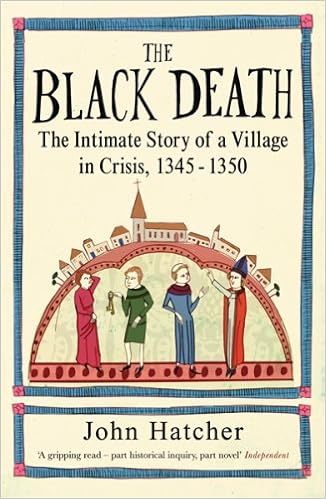 The Black Death - The Intimate Story of a Village
by
The Black Death remains the greatest disaster to befall humanity, killing about half the population of the planet in the 14th century. John Hatcher recreates everyday medieval life in a parish in Suffolk, from which an exceptional number of documents survive. This enables us to view events through the eyes of its residents, revealing in unique detail what it was like to live and die in these terrifying times.
With scrupulous attention to historical accuracy, John Hatcher describes what the parishioners experienced, what they knew and what they believed. His narrative is peopled with characters developed from the villagers named in the actual town records and a series of dramatic scenes portray how contemporaries must have experienced the momentous events.
The Black Death - The Intimate Story of a Village
by
The Black Death remains the greatest disaster to befall humanity, killing about half the population of the planet in the 14th century. John Hatcher recreates everyday medieval life in a parish in Suffolk, from which an exceptional number of documents survive. This enables us to view events through the eyes of its residents, revealing in unique detail what it was like to live and die in these terrifying times.
With scrupulous attention to historical accuracy, John Hatcher describes what the parishioners experienced, what they knew and what they believed. His narrative is peopled with characters developed from the villagers named in the actual town records and a series of dramatic scenes portray how contemporaries must have experienced the momentous events.
 Medieval Europe
by
Where can you buy cloth made with real gold thread? Which herb will keep your bed free of bedbugs? Why were pointy shoes dangerous? This title unravels the mysteries of life in Europe in the 12th and 13th centuries. Discover what staying in a castle was really like, whether medieval people believed in witches and dragons, and where you could hear minstrels playing music.
Medieval Europe
by
Where can you buy cloth made with real gold thread? Which herb will keep your bed free of bedbugs? Why were pointy shoes dangerous? This title unravels the mysteries of life in Europe in the 12th and 13th centuries. Discover what staying in a castle was really like, whether medieval people believed in witches and dragons, and where you could hear minstrels playing music.
 The Middle Ages 1066 - 1500
by
The Middle Ages 1066 - 1500
by
 Plague unclassified: secrets of the great plague revealed
by
Bubonic plague, otherwise known as the Black Death, has killed millions of people worldwide since the 14th century. Focusing on the last British outbreak, the Great Plague of London in 1665, Plague Unclassified takes readers on a journey back in time to uncover the story behind the disease. From what life was like living in London during the 1665 plague outbreak, to where plague came from, how it was spread, and whether is still exists today, real-life artefacts and documentation enable readers to build a true and real account of the bubonic plague and how it shaped Britain today.
Plague unclassified: secrets of the great plague revealed
by
Bubonic plague, otherwise known as the Black Death, has killed millions of people worldwide since the 14th century. Focusing on the last British outbreak, the Great Plague of London in 1665, Plague Unclassified takes readers on a journey back in time to uncover the story behind the disease. From what life was like living in London during the 1665 plague outbreak, to where plague came from, how it was spread, and whether is still exists today, real-life artefacts and documentation enable readers to build a true and real account of the bubonic plague and how it shaped Britain today.
 Medicine (History of invention)
by
Presenting the great story of medical progress from ancient times to the modern day, Medicine shows readers how far the practice of healing has come with the development of new technologies. Covering everything from diagnosis to surgery to alternative medicine, this book discusses the many inventions that have reduced the incidence of disease, helped doctors treat specific ailments, and allowed people to live longer, healthier lives. Illustrations accompany the engaging narrative, and a timeline, glossary, further reading list, and index provide easy access to a broad range of information on medicine and medical technology.
Medicine (History of invention)
by
Presenting the great story of medical progress from ancient times to the modern day, Medicine shows readers how far the practice of healing has come with the development of new technologies. Covering everything from diagnosis to surgery to alternative medicine, this book discusses the many inventions that have reduced the incidence of disease, helped doctors treat specific ailments, and allowed people to live longer, healthier lives. Illustrations accompany the engaging narrative, and a timeline, glossary, further reading list, and index provide easy access to a broad range of information on medicine and medical technology.
 Medieval Medicine and the Plague
by
Medicine was a mysterious art in the Middle Ages and had not yet benefited from the scientific discoveries we take for granted today. This astonishing new book illustrates how death and incurable disease were considered a common part of medieval life. Young readers will be fascinated by the history of the Black Death, or the Plague, which killed millions of people in Europe, and why medical treatments in the Middle Ages were often worse than the disease. The topics include: a timeline of medical changes through the Middle Ages; common medieval diseases and their causes, such as smallpox, tuberculosis, diphtheria, and leprosy; The Back Plague and the modern explanation for it; the Four Humors; operations and treatments such as bloodletting, cupping, cauterising; medicine makers such as apothecaries and housewives; famous doctors such as Hippocrates, Galen, Rhazes and Avicenna; and women's place in medicine.
Medieval Medicine and the Plague
by
Medicine was a mysterious art in the Middle Ages and had not yet benefited from the scientific discoveries we take for granted today. This astonishing new book illustrates how death and incurable disease were considered a common part of medieval life. Young readers will be fascinated by the history of the Black Death, or the Plague, which killed millions of people in Europe, and why medical treatments in the Middle Ages were often worse than the disease. The topics include: a timeline of medical changes through the Middle Ages; common medieval diseases and their causes, such as smallpox, tuberculosis, diphtheria, and leprosy; The Back Plague and the modern explanation for it; the Four Humors; operations and treatments such as bloodletting, cupping, cauterising; medicine makers such as apothecaries and housewives; famous doctors such as Hippocrates, Galen, Rhazes and Avicenna; and women's place in medicine.
 Medieval realms - Daily life
by
This gives readers an insight into the daily lives of medieval people. You can discover how life was different for landowners and peasants and about the kinds of food people ate, the jobs they did and how they entertained themselves. Find out why the Church was important to people's everyday lives, and how people were punished for their crimes. Learn about the major changes in the countryside and towns, and how life was transformed for everybody in medieval times. It includes contemporary written evidence, colour photographs and maps, a timeline, glossary and index.
Medieval realms - Daily life
by
This gives readers an insight into the daily lives of medieval people. You can discover how life was different for landowners and peasants and about the kinds of food people ate, the jobs they did and how they entertained themselves. Find out why the Church was important to people's everyday lives, and how people were punished for their crimes. Learn about the major changes in the countryside and towns, and how life was transformed for everybody in medieval times. It includes contemporary written evidence, colour photographs and maps, a timeline, glossary and index.
 Discovering the medieval world
by
This book offers a voyage of discovery through the tough and turbulent times we know as the Medieval Ages - an era of kings, queens and conquest. Written for junior secondary students, "Discovering the Medieval World" examines major aspects of medieval society by probing into the lives of the ordinary people who eked out an existence for themselves despite the many hardships.
Discovering the medieval world
by
This book offers a voyage of discovery through the tough and turbulent times we know as the Medieval Ages - an era of kings, queens and conquest. Written for junior secondary students, "Discovering the Medieval World" examines major aspects of medieval society by probing into the lives of the ordinary people who eked out an existence for themselves despite the many hardships.
 In the Wake of the Plague
by
The Black Death was the fourteenth century's equivalent of a nuclear war. It wiped out one-third of Europe's population, takingmillion lives. And yet, most of what we know about it is wrong. The details of the Plague etched in the minds of terrified schoolchildren -- the hideous black welts, the high fever, and the awful end by respiratory failure -- are more or less accurate. But what the Plague really was and how it made history remain shrouded in a haze of myths.
In the Wake of the Plague
by
The Black Death was the fourteenth century's equivalent of a nuclear war. It wiped out one-third of Europe's population, takingmillion lives. And yet, most of what we know about it is wrong. The details of the Plague etched in the minds of terrified schoolchildren -- the hideous black welts, the high fever, and the awful end by respiratory failure -- are more or less accurate. But what the Plague really was and how it made history remain shrouded in a haze of myths.


