
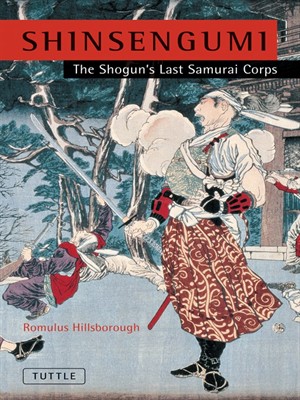
 Shinsengumi : The Shogun's Last Samurai Corps
by
Shinsengumi: The Shogun's last Samurai Corps is the true story of the notorious samurai corps formed in 1863 to arrest or kill the enemies of the Tokugawa Shogun.
The only book in English about the Shinsengumi, it focuses on the corps' two charismatic leaders, Kondo Isami and Hijikata Toshizo, both impeccable swordsmen. It is a history–in–brief of the final years of the Bakufu, which collapsed in 1867 with the restoration of Imperial rule. In writing Shinsengumi, Hillsborough referred mostly to Japanese–language primary sources, including letters, memoirs, journals, interviews, and eyewitness accounts, as well as definitive biographies and histories of the era.
The fall of the shogun's government (Tokugawa Bakufu, or simply Bakufu) in 1868, which had ruled Japan for over two and a half centuries, was the greatest event in modern Japanese history.
Shinsengumi : The Shogun's Last Samurai Corps
by
Shinsengumi: The Shogun's last Samurai Corps is the true story of the notorious samurai corps formed in 1863 to arrest or kill the enemies of the Tokugawa Shogun.
The only book in English about the Shinsengumi, it focuses on the corps' two charismatic leaders, Kondo Isami and Hijikata Toshizo, both impeccable swordsmen. It is a history–in–brief of the final years of the Bakufu, which collapsed in 1867 with the restoration of Imperial rule. In writing Shinsengumi, Hillsborough referred mostly to Japanese–language primary sources, including letters, memoirs, journals, interviews, and eyewitness accounts, as well as definitive biographies and histories of the era.
The fall of the shogun's government (Tokugawa Bakufu, or simply Bakufu) in 1868, which had ruled Japan for over two and a half centuries, was the greatest event in modern Japanese history.

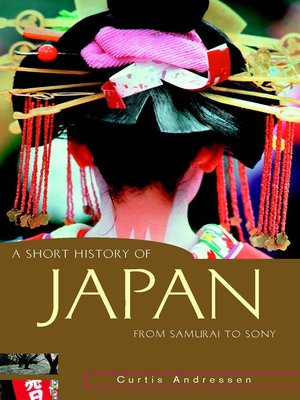 Short History of Japan
by
Japan is a country of contradictions and extremes. It is a country of age-old practices and cutting edge technology, strong martial traditions and refined artistic accomplishments. Few countries have been the subject of so much attention yet remain so elusive.
Japan is an island nation defined by its close proximity to, yet isolation from the Asian mainland. Throughout history, ideas adopted from both Asia and the West have, through this isolation, evolved in Japan into unique cultural hybrids. The result is a society that has traces of many civilisations and yet its own distinctive identity. Despite the region's few natural resources and frequent natural disasters, Japanese society has learned to thrive through a complex network of dependency and obligation born of the need to work together in a country where survival is relatively difficult.
From the influence of China to the impact of feudalism, modernisation and imperialism, from war and peace to the miracle economy and contemporary uncertainty, Curtis Andressen traces the threads of history, environment and culture that run through the centuries to explain much about the Japan of today.
Short History of Japan
by
Japan is a country of contradictions and extremes. It is a country of age-old practices and cutting edge technology, strong martial traditions and refined artistic accomplishments. Few countries have been the subject of so much attention yet remain so elusive.
Japan is an island nation defined by its close proximity to, yet isolation from the Asian mainland. Throughout history, ideas adopted from both Asia and the West have, through this isolation, evolved in Japan into unique cultural hybrids. The result is a society that has traces of many civilisations and yet its own distinctive identity. Despite the region's few natural resources and frequent natural disasters, Japanese society has learned to thrive through a complex network of dependency and obligation born of the need to work together in a country where survival is relatively difficult.
From the influence of China to the impact of feudalism, modernisation and imperialism, from war and peace to the miracle economy and contemporary uncertainty, Curtis Andressen traces the threads of history, environment and culture that run through the centuries to explain much about the Japan of today.
 A History of Tokyo 1867-1989
by
This tells the fascinating story of Tokyo's transformation from the Shogun's capital in an isolated Japan to the largest and the most modern city in the world. With the same scholarship and sparkling style that won him admiration as the foremost translator of great works of Japanese literature, Seidensticker offers the reader his brilliant vision of an entire society suddenly wrenched from an ancient feudal past into the modern world in a few short decades, and the enormous stresses and strains that this brought with it.
A History of Tokyo 1867-1989
by
This tells the fascinating story of Tokyo's transformation from the Shogun's capital in an isolated Japan to the largest and the most modern city in the world. With the same scholarship and sparkling style that won him admiration as the foremost translator of great works of Japanese literature, Seidensticker offers the reader his brilliant vision of an entire society suddenly wrenched from an ancient feudal past into the modern world in a few short decades, and the enormous stresses and strains that this brought with it.
 Politics and Society in Japan's Meiji Restoration
by
How did the end of the shoguns pave the way for modern Japan? Between the eighth and twelfth centuries, emperors ruled Japan. But powerful families gained the loyalty of the samurai - the emperors' warriors. In 1185 one local lord took control as shogun, leader of the samurai armies. for the next seven hundred years, the emperors were ceremonial figures, and the shoguns ruled Japan, banning interaction with the Western world. In the nineteenth century, Westerners demanded that Japan open to trade under the threat of invasion. Japan's shogunate realized it didn't have the military technology to fight them. When the shogun government made concessions to the Westerners, Japanese lords were outraged and returned their support to the emperor. the shogunate crumbled. In 1868 Emperor Meiji became ruler of Japan. He opened Japan to modern technology, and his military advisers created a global fighting force. the end of the shoguns, which led to the birth of modern Japan, was one of the world's pivotal moments.
Politics and Society in Japan's Meiji Restoration
by
How did the end of the shoguns pave the way for modern Japan? Between the eighth and twelfth centuries, emperors ruled Japan. But powerful families gained the loyalty of the samurai - the emperors' warriors. In 1185 one local lord took control as shogun, leader of the samurai armies. for the next seven hundred years, the emperors were ceremonial figures, and the shoguns ruled Japan, banning interaction with the Western world. In the nineteenth century, Westerners demanded that Japan open to trade under the threat of invasion. Japan's shogunate realized it didn't have the military technology to fight them. When the shogun government made concessions to the Westerners, Japanese lords were outraged and returned their support to the emperor. the shogunate crumbled. In 1868 Emperor Meiji became ruler of Japan. He opened Japan to modern technology, and his military advisers created a global fighting force. the end of the shoguns, which led to the birth of modern Japan, was one of the world's pivotal moments.
 Ancient Japan
by
Step back in time more than 30,000 years, to when the first settlers reached Japan and a highly sophisticated civilization was born. Explore the grand palaces of regal emperors and shoguns, be amazed by the fighting skills of the feuding samurai, and admire the exquisite embroidery of the palace women's glossy silk kimonos. Step-by-step projects allow you to delve into everyday life and find out about ancient Japanese foods, skills and fashions - make delicious rice balls, try your hand at the delicate art of calligraphy, and sculpt a netsuke toggle.
Ancient Japan
by
Step back in time more than 30,000 years, to when the first settlers reached Japan and a highly sophisticated civilization was born. Explore the grand palaces of regal emperors and shoguns, be amazed by the fighting skills of the feuding samurai, and admire the exquisite embroidery of the palace women's glossy silk kimonos. Step-by-step projects allow you to delve into everyday life and find out about ancient Japanese foods, skills and fashions - make delicious rice balls, try your hand at the delicate art of calligraphy, and sculpt a netsuke toggle.
 Samurai
by
Samurai: An Illustrated History brings the violent, tumultuous, and, at the same time, elegant world of the medieval Japanese samurai to life. This book of Japanese history traces the story of a unique historical phenomenon: a period of 700 years--equivalent to the entire stretch of Western history between the reigns of the Crusader king Richard the Lionhearted and of Queen Victoria at the height of the British Empire--during which an enclosed civilization was dominated by a single warrior caste. The historical narrative of samurai history is supported by explanations of samurai armor, weapons, fortifications, tactics, and customs, and illustrated with nearly 800 fascinating color photographs, maps, and sketches, including ancient scroll paintings and surviving suits of armor preserved for centuries in Japanese shrines.
Samurai
by
Samurai: An Illustrated History brings the violent, tumultuous, and, at the same time, elegant world of the medieval Japanese samurai to life. This book of Japanese history traces the story of a unique historical phenomenon: a period of 700 years--equivalent to the entire stretch of Western history between the reigns of the Crusader king Richard the Lionhearted and of Queen Victoria at the height of the British Empire--during which an enclosed civilization was dominated by a single warrior caste. The historical narrative of samurai history is supported by explanations of samurai armor, weapons, fortifications, tactics, and customs, and illustrated with nearly 800 fascinating color photographs, maps, and sketches, including ancient scroll paintings and surviving suits of armor preserved for centuries in Japanese shrines.
 Samurai Revolution
by
Samurai Revolution is divided into two books in one complete volume. Book I chronicles the series of tumultuous and bloody events between 1853 and 1868, collectively called the Meiji Restoration, the "dawn of modern Japan," when the shogun's government was overthrown and the Emperor was restored to his ancient seat of power. Book 2 covers the first turbulent decade of the restored monarchy in which the new Imperial government worked desperately to consolidate its power and introduce innovations that would putJapan on equal footing with Western powers that threatened to dominate it.
Samurai Revolution
by
Samurai Revolution is divided into two books in one complete volume. Book I chronicles the series of tumultuous and bloody events between 1853 and 1868, collectively called the Meiji Restoration, the "dawn of modern Japan," when the shogun's government was overthrown and the Emperor was restored to his ancient seat of power. Book 2 covers the first turbulent decade of the restored monarchy in which the new Imperial government worked desperately to consolidate its power and introduce innovations that would putJapan on equal footing with Western powers that threatened to dominate it.
 The Meiji restoration : monarchism, mass communication and conservative revolution
by
The Meiji Restoration of 1868 is one of the most astonishing political events of the modern era, yet it doesn't fit easily with Western precedents of mass mobilization and social transformation. This book challenges some of the preconceptions that have hindered the Restoration being understood on its own terms.
Close
The Meiji restoration : monarchism, mass communication and conservative revolution
by
The Meiji Restoration of 1868 is one of the most astonishing political events of the modern era, yet it doesn't fit easily with Western precedents of mass mobilization and social transformation. This book challenges some of the preconceptions that have hindered the Restoration being understood on its own terms.
Close
 The end of the shoguns and the birth of modern Japan
by
How did the end of the shoguns pave the way for modern Japan? Between the eighth and twelfth centuries, emperors ruled Japan. But powerful families gained the loyalty of the samurai - the emperors' warriors. In 1185 one local lord took control as shogun, leader of the samurai armies. for the next seven hundred years, the emperors were ceremonial figures, and the shoguns ruled Japan, banning interaction with the Western world. In the nineteenth century, Westerners demanded that Japan open to trade under the threat of invasion. Japan's shogunate realized it didn't have the military technology to fight them. When the shogun government made concessions to the Westerners, Japanese lords were outraged and returned their support to the emperor. the shogunate crumbled. In 1868 Emperor Meiji became ruler of Japan. He opened Japan to modern technology, and his military advisers created a global fighting force. the end of the shoguns, which led to the birth of modern Japan, was one of the world's pivotal moments.
The end of the shoguns and the birth of modern Japan
by
How did the end of the shoguns pave the way for modern Japan? Between the eighth and twelfth centuries, emperors ruled Japan. But powerful families gained the loyalty of the samurai - the emperors' warriors. In 1185 one local lord took control as shogun, leader of the samurai armies. for the next seven hundred years, the emperors were ceremonial figures, and the shoguns ruled Japan, banning interaction with the Western world. In the nineteenth century, Westerners demanded that Japan open to trade under the threat of invasion. Japan's shogunate realized it didn't have the military technology to fight them. When the shogun government made concessions to the Westerners, Japanese lords were outraged and returned their support to the emperor. the shogunate crumbled. In 1868 Emperor Meiji became ruler of Japan. He opened Japan to modern technology, and his military advisers created a global fighting force. the end of the shoguns, which led to the birth of modern Japan, was one of the world's pivotal moments.
 The emergence of Meiji Japan
by
This new edition brings together selected chapters from Volume 5 of The Cambridge History of Japan. Japan underwent momentous changes during the nineteenth century. This book chronicles the transition from Tokugawa rule, and the political process that finally ended centuries of warrior rule. It goes on to discuss the samurai rebellions against the Meiji Restoration, national movements for constitutional government that indirectly resulted in the Meiji Constitution of 1889, and Japan's twentieth-century drive to Great Power status.
The emergence of Meiji Japan
by
This new edition brings together selected chapters from Volume 5 of The Cambridge History of Japan. Japan underwent momentous changes during the nineteenth century. This book chronicles the transition from Tokugawa rule, and the political process that finally ended centuries of warrior rule. It goes on to discuss the samurai rebellions against the Meiji Restoration, national movements for constitutional government that indirectly resulted in the Meiji Constitution of 1889, and Japan's twentieth-century drive to Great Power status.


